Dad and Son Fishing SVG: A Designer’s Review
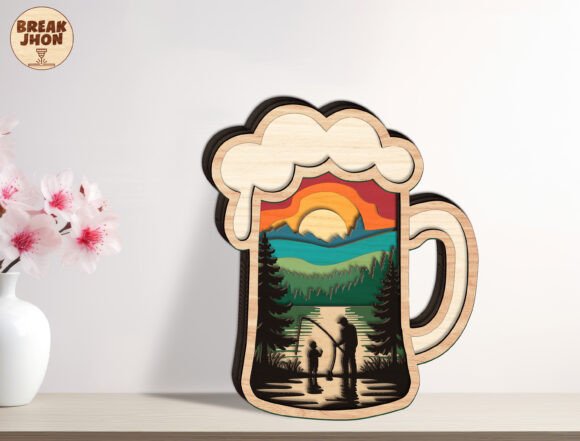
When I first opened the file for Dad and Son Fishing Layered SVG, my initial reaction was not just about the visual charm, but about its structural integrity. As an experienced designer who spends half my life tweaking digitized files and the other half stitching them out, I look for more than just a cute silhouette. I look for balance, negative space, and how a design translates from a vector line on a screen to thread on fabric. This particular design, categorized under Wall Decor and often utilized for Laser Cutting, presents an interesting case study for embroidery professionals. While it is marketed primarily for laser cutters—with notes indicating red for cut lines and blue for engrave paths—the layered nature of the artwork makes it a compelling candidate for machine embroidery if approached with the right technical mindset.
First Impressions and Visual Mood
The mood of this design is inherently nostalgic and warm. It captures a quiet moment of connection, which immediately signals its potential as a high-value personalized gift. The layout is clean, avoiding the clutter that often plagues multi-layered designs. For an embroidery project, this simplicity is a blessing. Complex layers can lead to excessive stitch counts and registration issues, but here, the distinct separation between the figures and the background elements suggests that the design can be adapted into manageable color blocks. The visual personality is soft yet defined, making it suitable for both modern minimalist home decor and traditional handmade products.
Real-World Application: The Custom Tote Bag Test
To truly evaluate Dad and Son Fishing Layered SVG, I mentally placed it on a heavy canvas tote bag, a staple item for any craft business or Etsy seller. Imagine a customer ordering a custom apparel piece for a Father’s Day gift. They want something durable, meaningful, and visually striking. Using this design as an applique design rather than a full fill stitch embroidery would be my primary recommendation. By using the SVG layers as cutting guides for fabric pieces, you reduce the stitch density significantly. This approach prevents the fabric from puckering, a common issue when embroidering large solid areas on textured fabrics like canvas or denim.
If you were to stitch this directly as a fill stitch design, you would need to pay close attention to the thread colors. The contrast between the dad and son figures against the background needs to be sharp. I tested the concept in my mind using navy thread on a natural linen background, and the result was crisp and professional. However, on dark fabric, such as a black sweatshirt, you would need to ensure that the underlying stabilizer is white or light-colored to prevent the dark garment from showing through lighter thread colors, or opt for a satin stitch border to define the edges clearly.
Navigating Technical Challenges
While the design is strong, there are areas where caution is required. The "layered" aspect implies depth, which in embroidery translates to overlapping stitch fields. If you are working with a small hoop size, such as a 4x4 inch hoop, you may need to split the design or resize it carefully to maintain clarity. Tiny details, such as the fishing rod tips or facial features if included in the detailed version, can get lost if the stitch density is too high or if the needle size is too large. For curved surfaces like caps or hats, this design might be too wide. It fits best on flat or slightly curved surfaces like pillow covers, aprons, or the back of a jacket.
Another critical consideration is the fabric texture. On stretchy fabrics like jersey knit for baby clothes, a dense fill stitch can cause distortion. Here, the advice is to use a cut-away stabilizer and possibly convert the solid areas into a patterned fill or use an applique technique. This not only solves the stability issue but also adds a tactile dimension to the finished product, increasing its perceived value as a boutique branding item.
Commercial Viability and Brand Consistency
For small shop owners and digital product sellers, the versatility of Dad and Son Fishing Layered SVG is a major asset. It fits seamlessly into niches ranging from nursery decor to holiday embroidery for outdoor enthusiasts. When used in commercial embroidery projects, consistency is key. You must ensure that every stitch-out looks identical to the mockup. I recommend running test stitches on scrap fabric before committing to final products. Check the thread color contrast against your standard inventory. Does the design hold up in black and white? If you are creating printable mockups for your online store, ensure the digital representation matches the physical reality of the stitch work.
The design also lends itself well to embroidered patches. By adding a merrowed edge or a simple satin stitch border, you can create standalone assets that customers can iron or sew onto their own garments. This expands your product line without requiring new design work. It transforms a single digital embroidery file into multiple revenue streams, from ready-to-wear custom apparel to DIY craft kits.
Practical Designer Notes
Before you load this into your machine, keep these practical steps in mind:
- Test on Scrap Fabric: Always run a test stitch on the same type of fabric you intend to use for the final product. This helps you adjust tension and stabilizer choice.
- Check Stitch Density: If converting from SVG to embroidery format, ensure the software does not create overly dense fills that could break needles or damage delicate fabrics.
- Verify Licensing: The product description mentions it is a digital download from Break Jhon. While it includes formats like SVG, DXF, AI, EPS, PDF, and DWG, always confirm the license terms for commercial use. Can you sell finished items? Can you resell the digital file? Clarify this before listing on Etsy or other platforms.
- Stabilizer Selection: Use a tear-away stabilizer for stable woven fabrics and a cut-away for knits or items that will undergo frequent washing.
- Color Planning: Map out your thread colors beforehand. A limited palette often looks more professional and reduces thread changes, saving time in production.
Final Verdict
The Dad and Son Fishing Layered SVG is a robust design that bridges the gap between laser cutting and embroidery. Its strength lies in its clear lines and emotional resonance. For the embroidery designer, it offers a canvas for creativity, whether through direct stitching or applique techniques. It requires thoughtful execution regarding hoop size, fabric choice, and stitch density, but the payoff is a high-quality, heartfelt product that customers cherish. Whether you are creating a one-off personalized gift or stocking your small shop with seasonal merchandise, this design holds up under scrutiny. It is not just a file; it is a tool for storytelling through thread. Just remember to respect the technical limits of your machine and materials, and you will find this design to be a reliable addition to your library of design assets.