Reviewing the Best Friends Shadow Box SVG for Embroidery
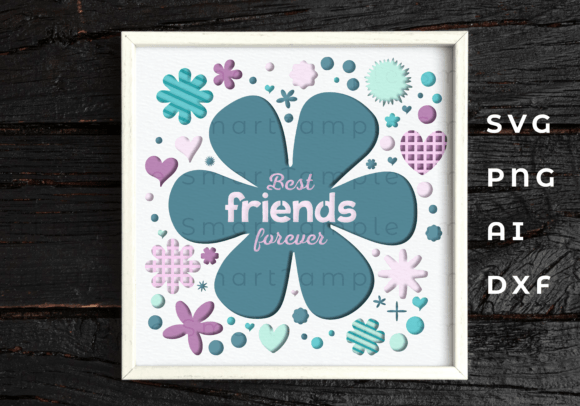
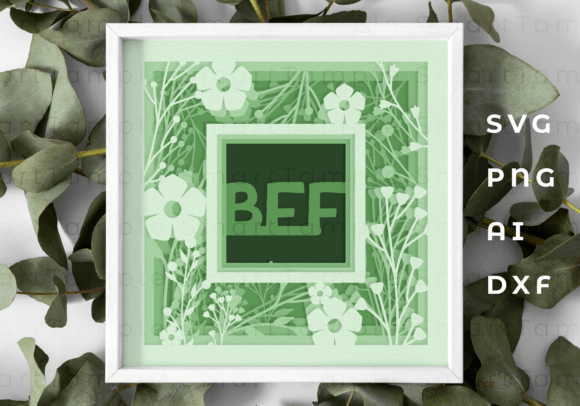
As a designer who spends half my life staring at digitized files and the other half watching needles punch through fabric, I have learned to look past the glossy preview images. When I first encountered the Best Friends Shadow Box SVG, my initial reaction was cautious curiosity. The product description explicitly labels it as a vector model intended for paper cutting, CNC, laser machines, Silhouette, Cricut, and Cameo devices. It includes SVG, AI, PNG, and DXF files. For an embroidery professional, this presents a unique challenge and opportunity. We are not dealing with a pre-digitized machine embroidery design ready to load into our software. Instead, we are looking at a raw 3D SVG asset that requires translation from cut lines to stitch paths.
This distinction matters. Many Etsy sellers and craft business owners mistakenly assume that any SVG can be directly converted into a flawless embroidery file. In reality, using a cut-file-based Shadow Boxes design for stitching requires a keen eye for detail. I decided to test this concept by imagining a real-world scenario: creating a high-end personalized gift for a boutique client. The goal was a custom embroidered tote bag featuring a layered, dimensional aesthetic that mimics the depth of a shadow box without the bulk of actual paper layers.
Translating Vector Lines into Stitch Reality
The visual personality of the Best Friends Shadow Box SVG is clean, geometric, and modern. It relies on layering to create depth. In paper crafting, this is achieved by stacking cardstock. In embroidery, we achieve this through strategic use of satin stitch borders, fill stitch backgrounds, and careful color placement. When I reviewed the vector paths, I noticed the sharp corners and intricate internal details. These are beautiful in laser cutting but can be problematic in embroidery if not adjusted.
For a tote bag design, the fabric texture is usually a sturdy canvas or cotton twill. This provides a stable base, which is crucial. However, the tiny details in the original SVG might get lost if the stitch density is too low or if the needle jumps are too frequent. I would recommend simplifying the smallest elements. If you are converting this digital embroidery file yourself, ensure that any text or fine lines are thickened slightly. A running stitch might suffice for decorative accents, but structural elements need the weight of a satin or fill stitch to hold up against wear and tear.
Practical Application in Custom Apparel
Let’s move beyond tote bags. Imagine applying this design to a sweatshirt embroidery project. Sweatshirts are thick, textured, and often fuzzy. The layered look of the Best Friends Shadow Box SVG could look stunning here if executed with high-contrast thread colors. I would suggest using a lighter thread for the background layers and a darker, bolder thread for the foreground elements to mimic the shadow effect. This creates visual depth without adding physical bulk.
However, caution is needed. On stretchy fabrics like jersey knits used in t-shirts, the tension of dense stitching can cause puckering. This is where your choice of stabilizer becomes critical. A cut-away stabilizer is non-negotiable for garments that will be washed frequently. If you are creating a baby embroidery item, such as a onesie, you must ensure the back of the stitching is soft. The layered nature of this design means there will be many jump stitches and trim points. Covering the back with a soft fusible interfacing or using a backing tape can prevent irritation against sensitive skin.
Navigating Fabric and Hoop Constraints
One of the most common mistakes I see with complex design assets is ignoring the hoop size. The Best Friends Shadow Box SVG may scale well for paper, but embroidery has physical limits. If you attempt to stitch this on a small 4x4 inch hoop, the details will become cramped. I recommend testing the design on scrap fabric first. Check how the design behaves at different scales. Does the text remain legible? Do the corners pull up?
Dark fabrics present another challenge. If you are stitching on navy or black fabric, the underlying layers of the shadow box effect might disappear if the thread colors are not vibrant enough. Always test your embroidery file in black and white mockups before committing to thread. This helps you visualize contrast without the distraction of color. For a holiday embroidery project, such as a festive pillow cover, metallic threads could add a nice touch to the border elements, but they require slower machine speeds and careful tension adjustments.
Commercial Viability and Brand Consistency
For small shop product creators, consistency is key. If you plan to sell this as a personalized gift or part of a boutique branding line, you need to ensure the final finished product looks professional. The Best Friends Shadow Box SVG offers a trendy, modern aesthetic that appeals to younger demographics. It fits well with current trends in minimalist home decor and personalized apparel.
However, remember that this is a vector file, not a native embroidery format. You must confirm licensing before selling finished items. While the product description mentions it is a digital product for cutting machines, using it for commercial embroidery may require specific permissions or additional digitizing work. Always check the license terms. If you are an appliqué design enthusiast, you might consider using the SVG shapes as cut templates for fabric appliqué, then stitching around the edges. This reduces stitch count and gives a clean, crisp look that is very popular in commercial embroidery.
Final Designer Notes
Before you load this into your machine, take a moment to evaluate the practicalities. Inspect small details in the vector file. Are there nodes that are too close together? These can cause needle breaks. Compare light and dark fabric backgrounds to see how the design pops. Use proper stabilizer for your specific fabric type. Whether you are making an embroidered patch, a cap, or a kitchen towel, the success of the project lies in the preparation.
The Best Friends Shadow Box SVG is a versatile asset, but it demands respect for the medium. It is not a plug-and-play solution for embroidery without some technical intervention. By understanding the difference between cut lines and stitch paths, you can transform this 3D SVG into a stunning textile art piece. It requires patience, testing, and a good eye for detail, but the result can be a high-value handmade product that stands out in a crowded market. Treat it as a design foundation, not a final answer, and you will unlock its true potential for your craft business.