Cow Print Alphabet 3D SVG: A Designer’s Review
As a designer who has spent countless hours digitizing and testing embroidery files, I approach every new asset with a critical eye. We are not just looking for pretty shapes; we are looking for functionality, stitchability, and market appeal. Recently, I evaluated the Cow Print Alphabet 3D SVG to determine its viability for real-world projects. While the product description highlights its utility for laser cutting and vinyl applications, my focus was on how this aesthetic translates into the tactile world of thread and fabric.
First Impressions and Visual Personality
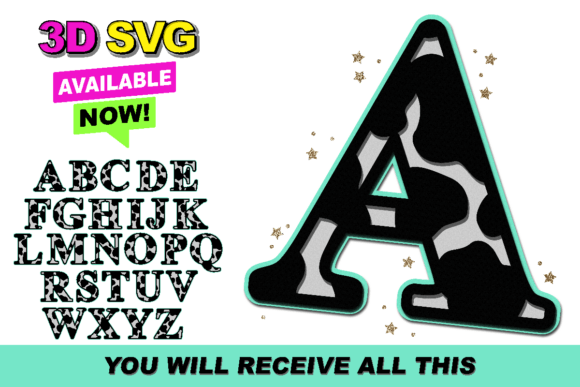
The immediate mood this design creates is playful yet modern. The cow print pattern is no longer just a rural farmhouse trope; it has evolved into a chic, high-contrast graphic element. The "3D" aspect mentioned in the title suggests depth, which in an embroidery context usually implies layered applique or dense fill stitches that create texture. For a designer, this is exciting because texture sells. Customers do not just buy an embroidered item; they buy the feeling of quality craftsmanship.
The layout of the alphabet appears bold and legible. In embroidery, clarity is king. If the letters are too intricate, they become a muddy mess of thread on small items like baby onesies or caps. From my initial review, the shapes seem robust enough to hold their form even when scaled down, provided the stitch density is managed correctly. This visual personality fits naturally into contemporary nursery decor, trendy apparel, and boutique home goods.
Real-World Application: The Custom Tote Bag Test
To truly understand the value of the Cow Print Alphabet 3D SVG, I imagined a specific client project: a custom embroidered tote bag for a local boutique. The client wanted something eye-catching but neutral enough to match various outfits. Using this design, I envisioned a large, central initial in a monochrome palette—black thread on white canvas, or vice versa.
In this scenario, the design performs well because the high contrast of the cow print pattern draws the eye immediately. However, the execution matters. For a tote bag, which undergoes significant stress and washing, the design would need a solid satin stitch border to prevent fraying if using an applique method. If using a full fill stitch approach, the stitch density must be balanced to avoid puckering the heavy canvas fabric. This is where practical design judgment comes in. You cannot simply load the file and hit start; you must consider the fabric texture and the end-use of the handmade product.
Versatility Across Product Lines
Beyond tote bags, this design has strong potential in several other categories. For custom apparel, such as sweatshirts or t-shirts, the playful nature of the cow print appeals to a younger demographic. It works exceptionally well for baby embroidery projects, where parents are increasingly looking for gender-neutral, modern designs rather than traditional pastels. An embroidered patch featuring these letters could also serve as a fantastic add-on product for Etsy sellers looking to increase their average order value.
It is important to note that while the product is categorized under Wall Decor and described for Laser Cutting, its application in embroidery requires adaptation. Laser cutters handle sharp vectors differently than needle machines handle thread. Therefore, when using this digital embroidery file concept for stitching, one must ensure the software interprets the "3D" layers correctly. If the SVG is intended for cutting, it may need to be manually digitized or adjusted in your embroidery software to create proper stitch paths, such as satin stitch outlines or fill stitch backgrounds.
Technical Considerations and Constraints
No design is perfect for every situation. There are specific scenarios where you should use the Cow Print Alphabet 3D SVG with caution. First, consider the hoop size. If you are working with a small 4x4 hoop, detailed corners in the letters might get lost. Always test the design on scrap fabric first to check for clarity. Second, be mindful of stretchy fabrics. High-density stitching on thin, stretchy material like jersey knit can cause distortion. Using a cut-away stabilizer is non-negotiable in these cases to maintain the integrity of the finished product.
Additionally, dark fabrics present a challenge. If you are stitching white cow print patterns on black fabric, you must ensure your thread colors have enough contrast. Sometimes, a underlying layer of white thread is necessary to make the top colors pop. This adds to the stitch count and production time, which is a crucial factor for craft business owners calculating their profit margins.
Enhancing Brand Value and Customer Trust
From a business perspective, using distinctive designs like this can significantly enhance brand consistency. When customers see a unique, well-executed design, it builds trust. They perceive the item as a premium personalized gift rather than a mass-produced commodity. For small shop products, this differentiation is vital. Whether you are creating holiday embroidery gifts or everyday wear, the professional presentation of the stitch work reflects directly on your brand.
Moreover, using such designs allows for creative marketing. You can create printable mockups showing the design on various items, helping customers visualize the final result. This reduces hesitation and increases buyer engagement. However, always confirm licensing before selling finished items. The product description mentions it includes an SVG in a zipped folder, but it does not explicitly state commercial embroidery rights. As a responsible designer, I advise checking the license terms carefully to ensure you are compliant when using this as a commercial embroidery asset.
Practical Designer Notes for Implementation
- Test on Scrap Fabric: Always run a test stitch-out to check for thread breaks or nesting issues.
- Check Thread Contrast: Ensure your thread colors stand out against the fabric background, especially for the cow print spots.
- Review Stitch Density: Adjust density settings in your software to prevent puckering on lighter fabrics.
- Confirm Hoop Size: Make sure the design fits comfortably within your machine’s hoop without hitting the edges.
- Inspect Small Details: Zoom in on the vector file to ensure there are no stray nodes or open paths that could cause stitching errors.
- Use Proper Stabilizer: Match the stabilizer type to the fabric weight and stretchiness.
- Verify Licensing: Confirm if the file allows for commercial use of finished physical goods.
In conclusion, the Cow Print Alphabet 3D SVG offers a stylish, modern aesthetic that can elevate various embroidery projects. While it requires careful technical handling regarding stitch density and fabric choice, its visual appeal and versatility make it a valuable addition to any designer’s toolkit. By approaching it with practical judgment and attention to detail, you can create stunning, high-quality items that resonate with customers and strengthen your brand.