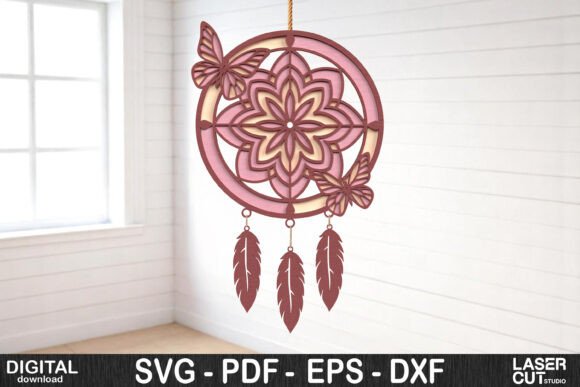
Reviewing the Butterfly 3D SVG Crafting File BUNDLE
As a designer who has spent years translating digital vectors into tangible, stitched reality, I approach every new asset with a mix of curiosity and caution. We have all been there: downloading a digital embroidery file that looks pristine on screen but turns into a tangled mess of thread breaks and puckering on the hoop. Recently, I evaluated the Butterfly 3D SVG Crafting File BUNDLE. While this package is explicitly marketed toward laser cutting and Wall Decor, my interest lay in its potential adaptation for textile applications. Can a design built for rigid materials translate effectively to soft fabrics? Let’s dive into the practical realities of using this asset in a real-world embroidery project.
First Impressions: Form, Flow, and Fabric Potential
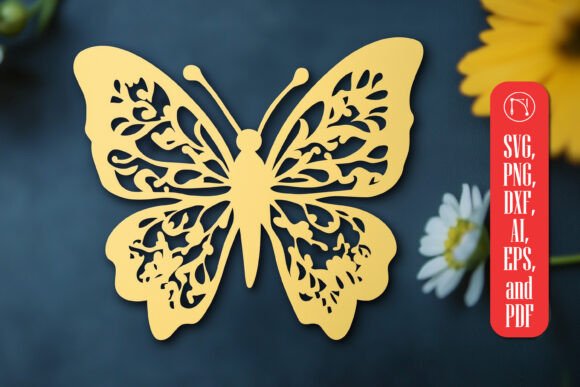
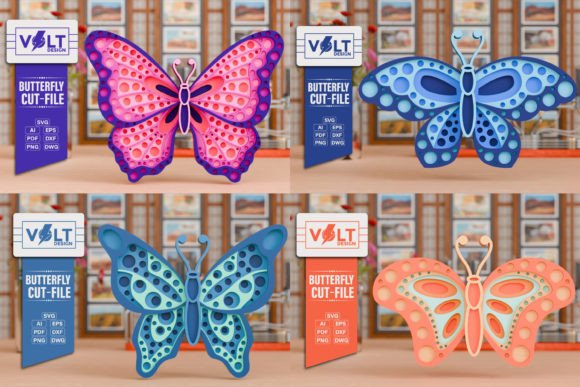
The immediate visual appeal of the butterfly motif is undeniable. It carries a sense of lightness and organic movement, which is crucial for any design intended for apparel or home textiles. The lines are clean, suggesting a modern aesthetic that avoids the cluttered look of older, overly complex vector art. For an Etsy seller or small shop product creator, this cleanliness is vital. It signals professionalism and ensures that the final finished product does not look dated.
However, we must address the elephant in the room: this is a Laser Cutting file set. The bundle includes Ai, EPS, SVG, PNG, PDF, DXF, and DWG formats. Notably absent are native machine embroidery formats like PES, DST, or JEF. This means you cannot simply load this onto your machine and hit start. You are working with vector outlines. For an experienced designer, this is not a dealbreaker; it is a starting point. It requires digitizing or converting these shapes into stitch types such as satin stitch, fill stitch, or running stitch. The question is whether the geometry supports this transition.
The Real-World Test: A Custom Tote Bag Scenario
To test the viability of this design, I imagined a common commercial scenario: creating a line of eco-friendly tote bags for a local boutique. The client wanted a subtle yet elegant nature theme. I selected the butterfly silhouette from the bundle to serve as the basis for an applique design.
Using the SVG file, I traced the outline to create a placement stitch and a tack-down stitch. The shape’s symmetry worked in my favor, allowing for balanced stitch density across the wings. When stitched out on a heavy canvas tote, the result was striking. The sharp edges of the laser-cut original translated well into crisp satin columns. However, I noticed that the inner details, which are perfect for laser precision, required simplification for embroidery. Tiny cutouts in the wing patterns would likely cause registration issues or thread breaks if attempted as pure embroidery without applique fabric backing.
This experience highlights a key insight for craft business owners: this bundle is best used as a template for applique or simplified fill work rather than intricate free-standing lace or dense detail work. The thread colors I chose—soft pastels against a natural cotton background—enhanced the delicate mood of the design, proving its versatility for personalized gift items.
Navigating Fabric and Hoop Constraints
One must be realistic about where this design succeeds and where it struggles. On stable fabrics like denim, canvas, or twill, the butterfly holds its shape beautifully. However, when I considered applying it to stretchy knits for sweatshirt embroidery or custom apparel, caution was necessary. Without proper stabilization, the open spaces in the butterfly wings could lead to distortion.
For baby embroidery projects, such as onesies or burp cloths, the scale becomes critical. The original files may be too large for standard 4x4 hoops. You would need to resize the vector significantly. When shrinking vector art for embroidery, you risk losing definition. I recommend testing the design on scrap fabric first to ensure the hoop size accommodates the resized version without compromising the visual integrity. Additionally, for curved surfaces like caps, the flat nature of the butterfly design might require splitting the motif or adjusting the underlay to prevent pulling.
Commercial Value and Brand Consistency
For digital product sellers and creative entrepreneurs, the value of this bundle lies in its adaptability. While it is not a ready-to-stitch machine embroidery design, it provides a high-quality base for creating unique assets. By digitizing the SVG yourself, you avoid the generic look of pre-made files found on mass-market sites. This exclusivity builds customer trust and enhances brand consistency.
If you are selling holiday embroidery items or wedding gifts, the elegance of the butterfly can elevate the perceived value of the item. A well-executed embroidered butterfly on a pillow cover or kitchen towel suggests attention to detail. However, remember that the burden of quality control shifts to you. You must determine the appropriate stabilizer type and thread tension. There is no manual included for stitch counts because this is not a native embroidery file. You are the engineer here.
Practical Designer Notes for Implementation
Before committing to a full production run using the Butterfly 3D SVG Crafting File BUNDLE, consider these practical steps:
- Verify Licensing: Ensure the license allows for commercial use of derived works. Since you are converting the file, confirm you have the right to sell the resulting embroidered items.
- Test on Scrap Fabric: Always run a test stitch-out on the same fabric type you intend to use for the final product. Check for puckering or thread breaks.
- Check Contrast: Use black and white mockups to see if the design’s details stand out against your chosen fabric color. Low contrast can make the design disappear from a distance.
- Simplify Details: If digitizing, remove tiny nodes or extremely narrow paths that cannot be realistically stitched with standard thread weights.
- Consider Applique: Given the laser-cut origin, using fabric applique for the wings and only stitching the outline can save time and reduce stitch count, making it ideal for tote bag design or large embroidered patch projects.
Final Verdict
The Butterfly 3D SVG Crafting File BUNDLE is a robust resource for designers who understand the bridge between vector art and textile craft. It is not a plug-and-play solution for embroidery machines, but it is a powerful foundation for creating custom design assets. For handmade product creators willing to invest time in digitizing or adapting the shapes, it offers a unique aesthetic that stands out in the crowded marketplace of commercial embroidery. Just remember to respect the limitations of thread and fabric, and you will find this butterfly can indeed take flight in your next collection.